What Hath God Wrought: The Transformation of America, 1815-1848 by Daniel Walker Howe
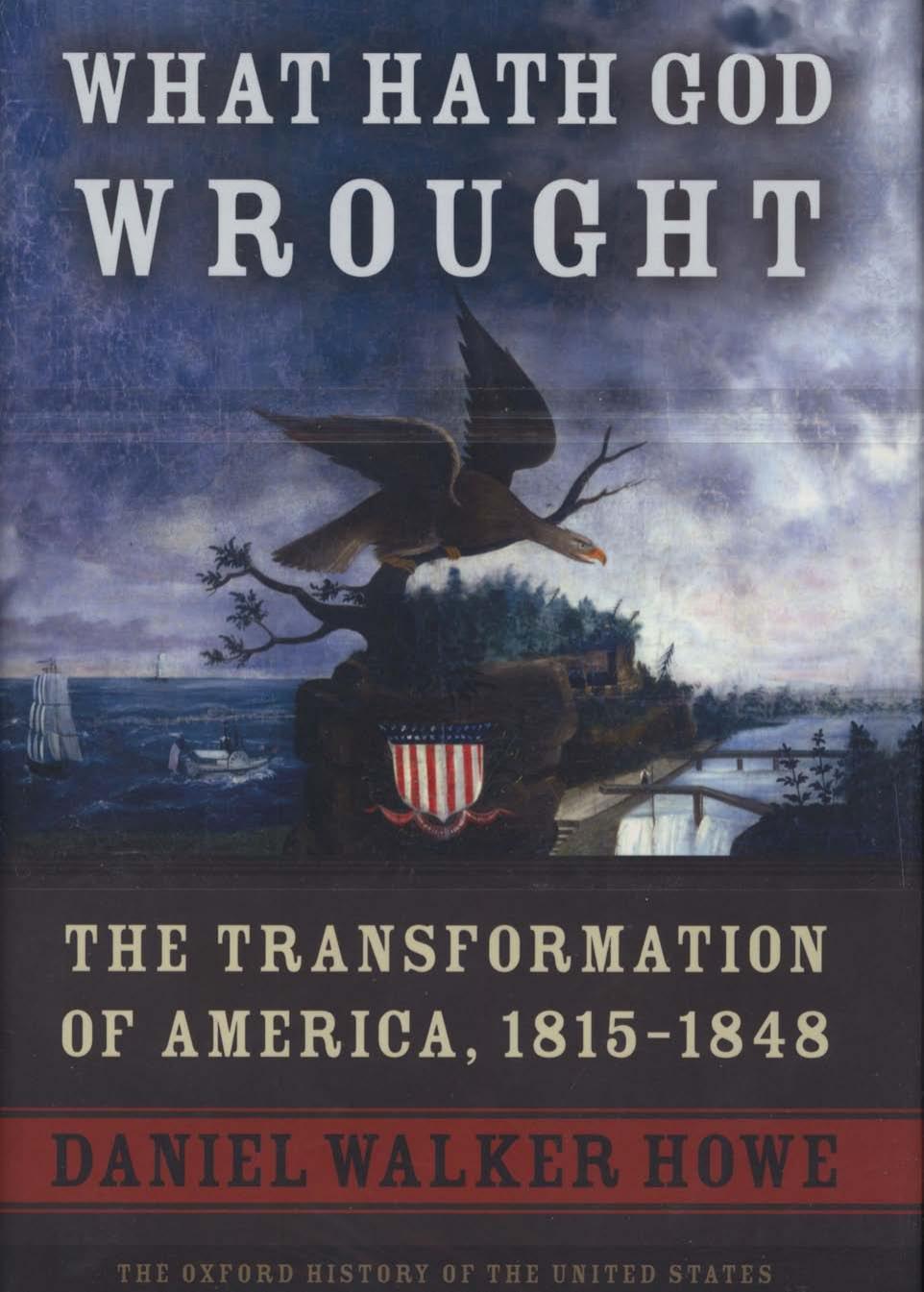
Author:Daniel Walker Howe [Howe, Daniel Walker]
Language: eng
Format: epub, mobi, pdf
Tags: Oxford History of the United States, Military History, 19th Century, Political Science, U.S.A., Politics, American History, History
ISBN: 9780195078947
Publisher: Oxford University Press
Published: 2007-01-01T15:00:00+00:00
13
Jackson’s Third Term
“Andrew Jackson strengthened the presidency,” it is often claimed. True, Old Hickory extended the circle of presidential advisors, expanded the patronage to be dispensed, and broadened use of the veto power. He successfully combined the office of the presidency with leadership of his political party. He triumphed in confrontations with his rivals Biddle and Calhoun. Yet the power of President Jackson remained to a large extent a function of his personal popularity, that is, charismatic rather than institutional. He did not succeed in transferring all of his own power to his successors. Indeed, the second party system that resulted from his rule proved to be a period of weak presidents. (James Knox Polk was the only exception, and even he served but one term.) Jackson did not so much strengthen the institution of the presidency as set an example that later popular presidents could invoke. Martin Van Buren, however, did not make himself one of these. Adept at gaining power, he proved largely unsuccessful in wielding it. Jackson’s heir was fated to preside ineffectually over a time of economic hardship and bitter conflicts.
A son of Dutch innkeepers, Martin Van Buren of New York was the first president of non-British ancestry and the first to have been born a citizen of the United States. (His predecessors, all born before the Revolution, started life as British subjects.) Because he was Jackson’s chosen successor, Van Buren’s presidency has been dubbed Jackson’s third term. In most personal respects, of course, the New Yorker seemed utterly unlike Old Hickory: A small, dapper man, ingratiating, flexible, one who got his way through craft rather than assertiveness, he was famously evasive. A senator who made a bet that he could get the Little Magician to commit himself to an assertion once asked Van Buren if it was true that the sun came up in the East. “I invariably sleep until after sunrise,” replied the Fox of Kinderhook.1 Van Buren did, however, commit himself to “tread generally in the footsteps of President Jackson,” and in most respects he did so, retaining not only Jackson’s cabinet but the kitchen cabinet as well. In his inaugural address, Van Buren defined his goal as preserving the legacy of the Founders. He then humbly deferred to “his illustrious
1. Van Buren told this story on himself: Autobiography, ed. John Fitzpatrick (Washington, 1920), 199.
predecessor.” The personality of the outgoing president continued to dominate the occasion; “for once,” Thomas Hart Benton commented, “the rising was eclipsed by the setting sun.”2
Van Buren’s genial social skills impressed everyone, even his political enemies. A master of the new popular brand of party politics based on publicity, patronage, and organization, in private life he loved the traditional arts of conversation and hospitality. In combining political shrewdness with gracious living, Van Buren resembled the Republican patriarch Thomas Jefferson, whom he admired perhaps even more than he did Jackson. Van Buren played politics as a game, and he played it to win. He practiced a popular version of the
Download
What Hath God Wrought: The Transformation of America, 1815-1848 by Daniel Walker Howe.mobi
What Hath God Wrought: The Transformation of America, 1815-1848 by Daniel Walker Howe.pdf
This site does not store any files on its server. We only index and link to content provided by other sites. Please contact the content providers to delete copyright contents if any and email us, we'll remove relevant links or contents immediately.
| Africa | Americas |
| Arctic & Antarctica | Asia |
| Australia & Oceania | Europe |
| Middle East | Russia |
| United States | World |
| Ancient Civilizations | Military |
| Historical Study & Educational Resources |
Cat's cradle by Kurt Vonnegut(15555)
Pimp by Iceberg Slim(14795)
4 3 2 1: A Novel by Paul Auster(12611)
Underground: A Human History of the Worlds Beneath Our Feet by Will Hunt(12230)
The Radium Girls by Kate Moore(12180)
Wiseguy by Nicholas Pileggi(5934)
The Fire Next Time by James Baldwin(5582)
Perfect Rhythm by Jae(5541)
American History Stories, Volume III (Yesterday's Classics) by Pratt Mara L(5386)
Paper Towns by Green John(5325)
Pale Blue Dot by Carl Sagan(5154)
A Higher Loyalty: Truth, Lies, and Leadership by James Comey(5087)
The Doomsday Machine by Daniel Ellsberg(4619)
The Mayflower and the Pilgrims' New World by Nathaniel Philbrick(4606)
Killers of the Flower Moon: The Osage Murders and the Birth of the FBI by David Grann(4547)
The Sympathizer by Viet Thanh Nguyen(4509)
Too Much and Not the Mood by Durga Chew-Bose(4455)
The Borden Murders by Sarah Miller(4447)
Sticky Fingers by Joe Hagan(4315)
